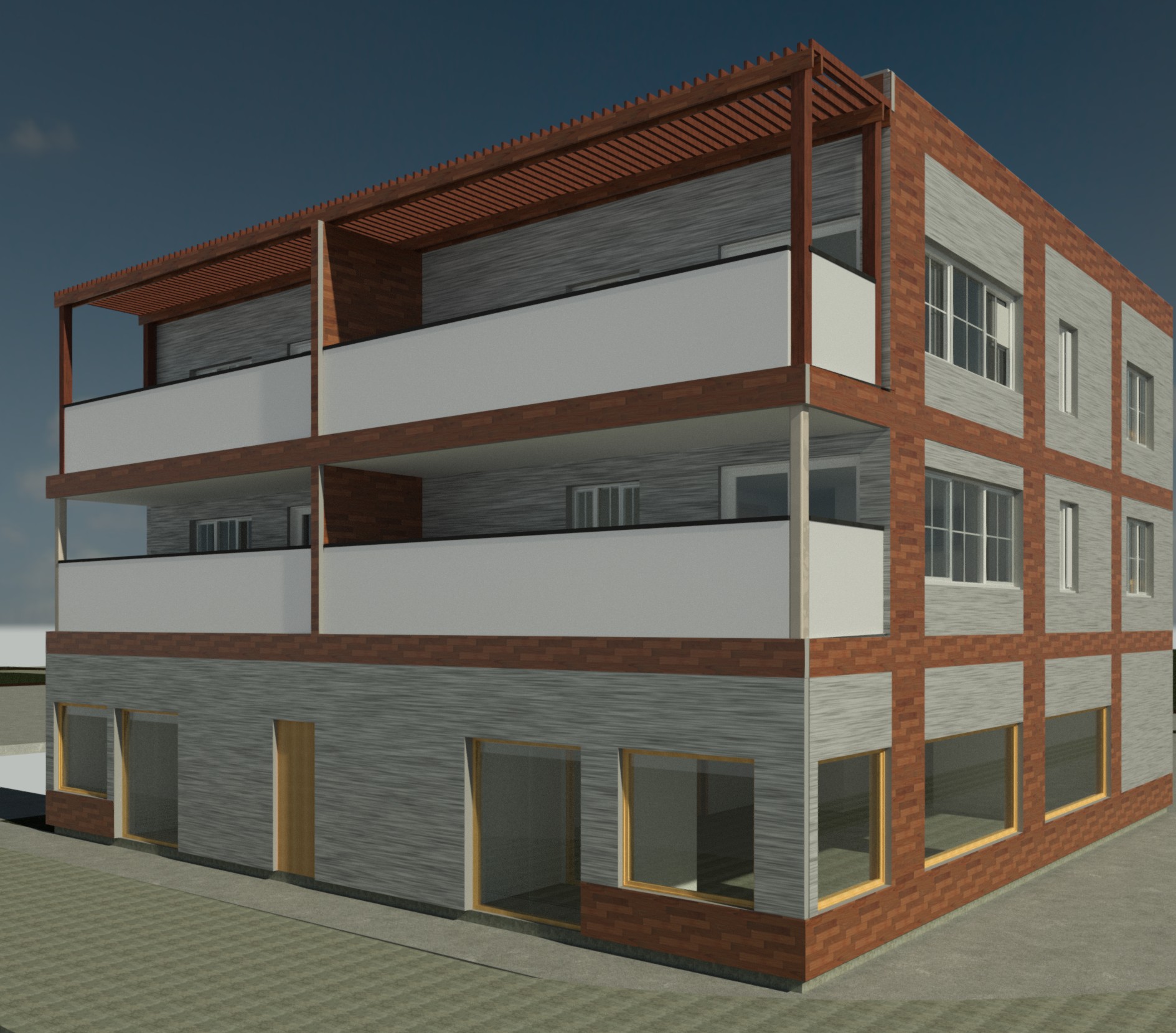
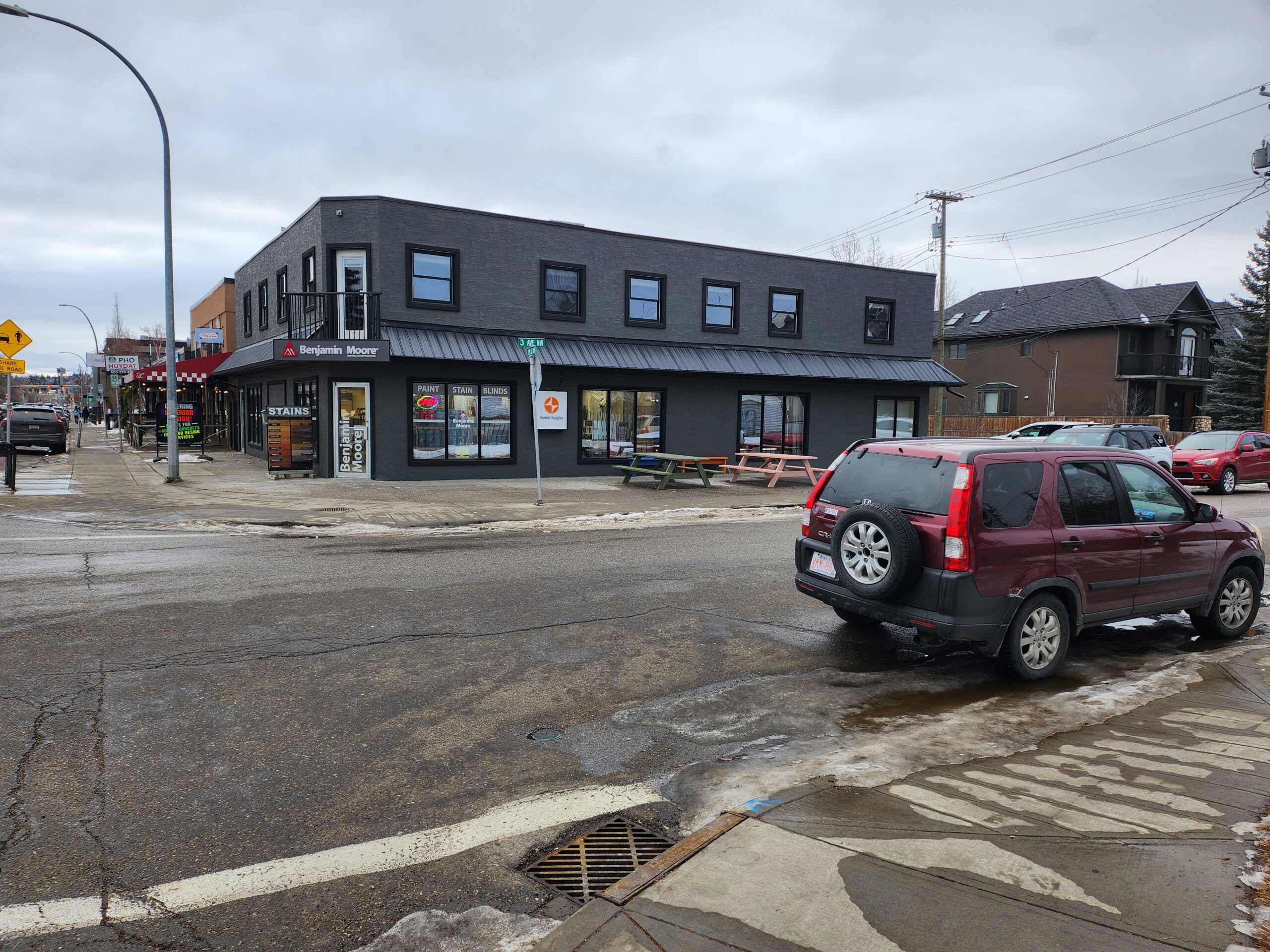
During the first weeks of the semester I spent time researching different parcels which could be best for my semester project. With a wider selection of areas but a smaller selection of available parcels I had to narrow down the parcel type I was looking for, then the area which I preferred. Since I worked on a parcel in the middle of a block for my first semester I chose to work on a corner parcel this semester to get more familiar with the unique land use bylaw requirements for corner lots. Next I looked for a good area to work in, landing on 19th Street due to its proximity to downtown, schools, shops and universities while being in a quieter area than along the trans Canada highway. I chose 321 due to its CN-1 zoning, and size being within 500 and 800 square meters.
After choosing my parcel I looked into making the most of the 1.0 floor area ratio. By using roof decks and balconies I was able to make large main floor commercial areas while adding extra value to the residential units. For the first interim report I looked into roof decks further in order to have a better understanding of the systems as I began to work on the Revit model. While working on my first version of the Revit model, I focused on minimizing hallway space and maximizing usable floor area. By making one unit a split unit I was able to fit five residential suites into my building. As I designed the stairs for my building, I focused on making straight stairs as often as possible in order to minimize space used on landings.
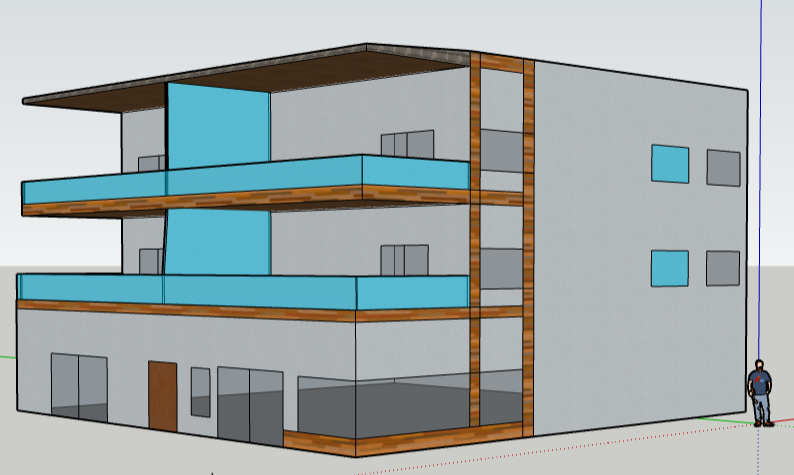
Within the split level unit I used winders, which is only possible in private staircases, in order to minimize the space taken up by the stairs in the already tight unit. Fitting mechanical rooms into each residential unit while maintaining good floor plans was my next challenge. I was able to fit each from into corners of the units as well as add a washing machine, removing the need for a communal laundry room which many similar buildings use instead.
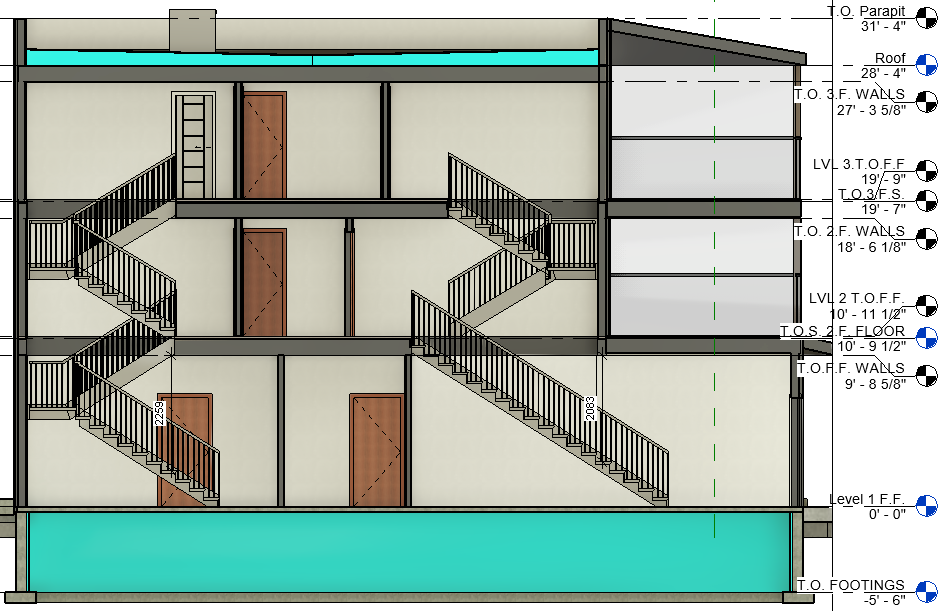
As I remade the project for interim report three, I focused on changing dimensions to allow for a slightly larger parking lot and residential units. By reducing the size of the main floor I was able to align the vestibules with the wall behind the roof decks, reducing the size of the roof decks but increasing the size of the units. This allowed me to add hidden columns within the vestibules, supporting the upper floors and removing wasted space in the commercial units. Then while working on my joist layout, I made the walls surrounding the staircase structural and slightly reduced the width of the building allowing for all I-joists to stay under 20 feet.
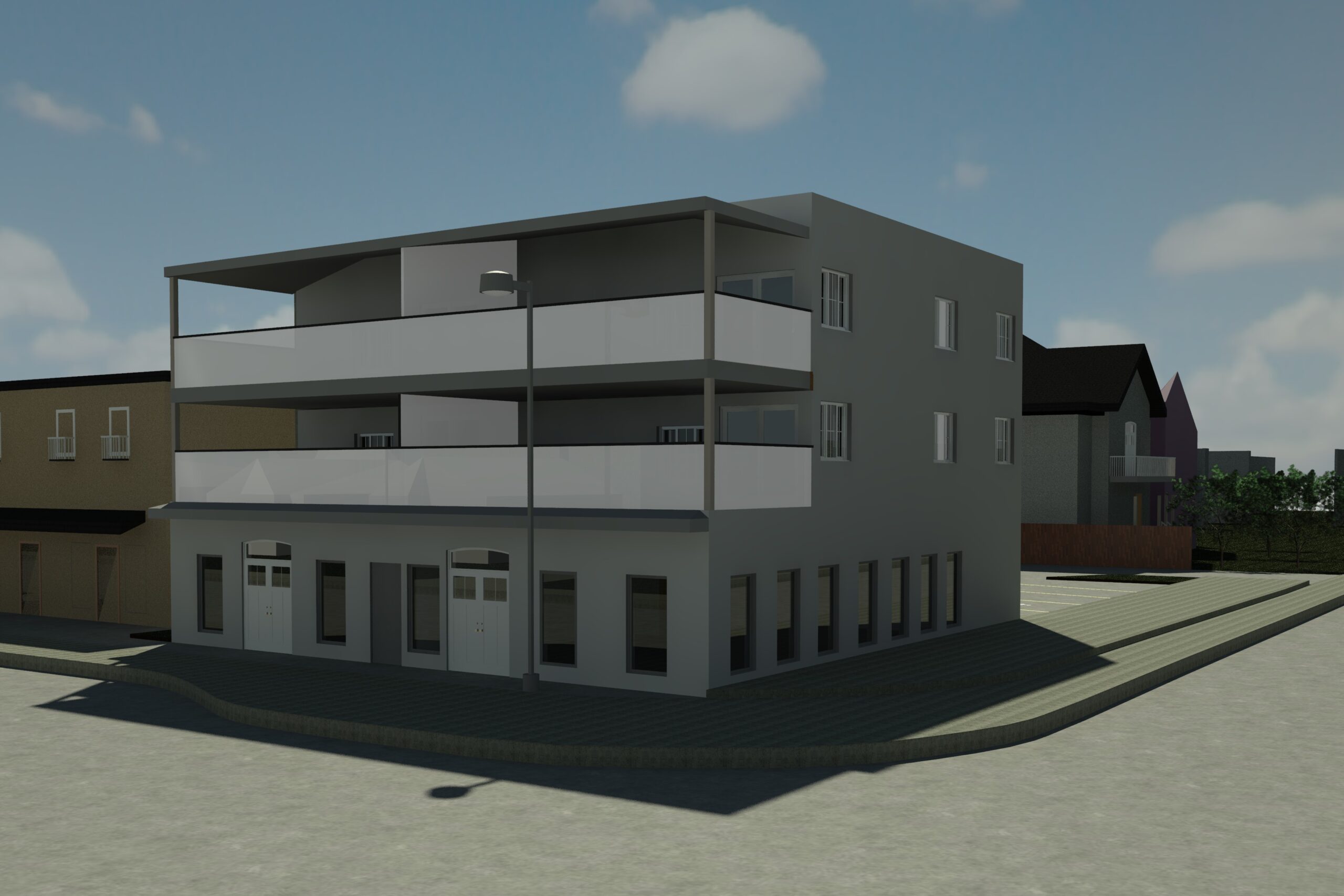
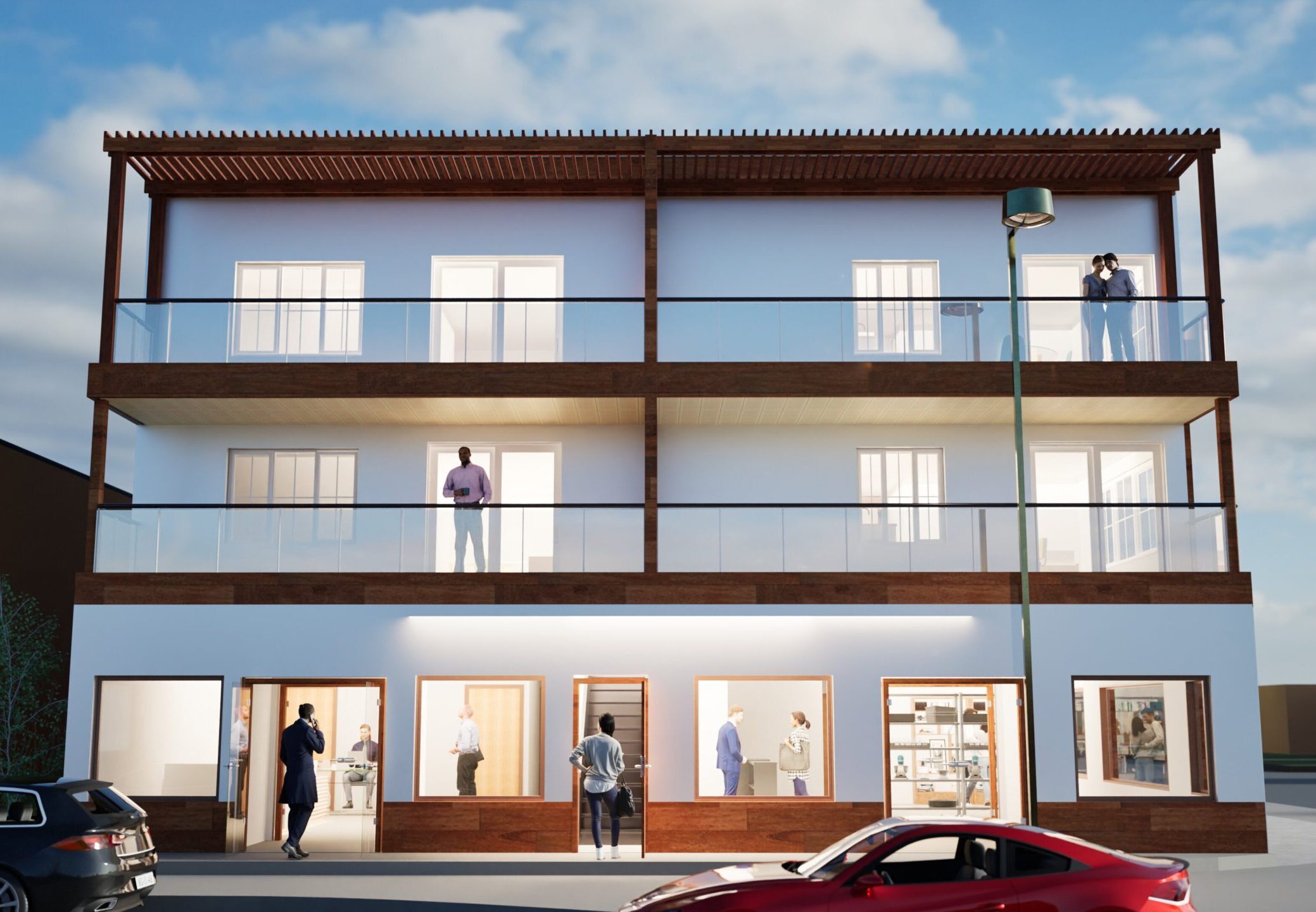
As I worked on the facade design, I looked at the surrounding buildings along 19th Street. Many used aluminium panels and wood, so I changed the facade design from solid aluminum composite panels to incorporate wood composite panels, dividing my design and improving the look of the facade. During my first draft of the building I had incorporated a roof above the balconies but to match the design of the facade, I added a wooden pergola.